Ask any writer what they love (related to writing) and usually the first thing they say is NOT a new software program. They will wax poetic about journals (and then special pens). We LOVE journals especially. Maybe it’s the romance of writing that great novel, just the way Jane Austin or Mark Twain, or many other classic writers did, by hand. We can’t help but stroke the covers, imagining the words of wonder we can create.
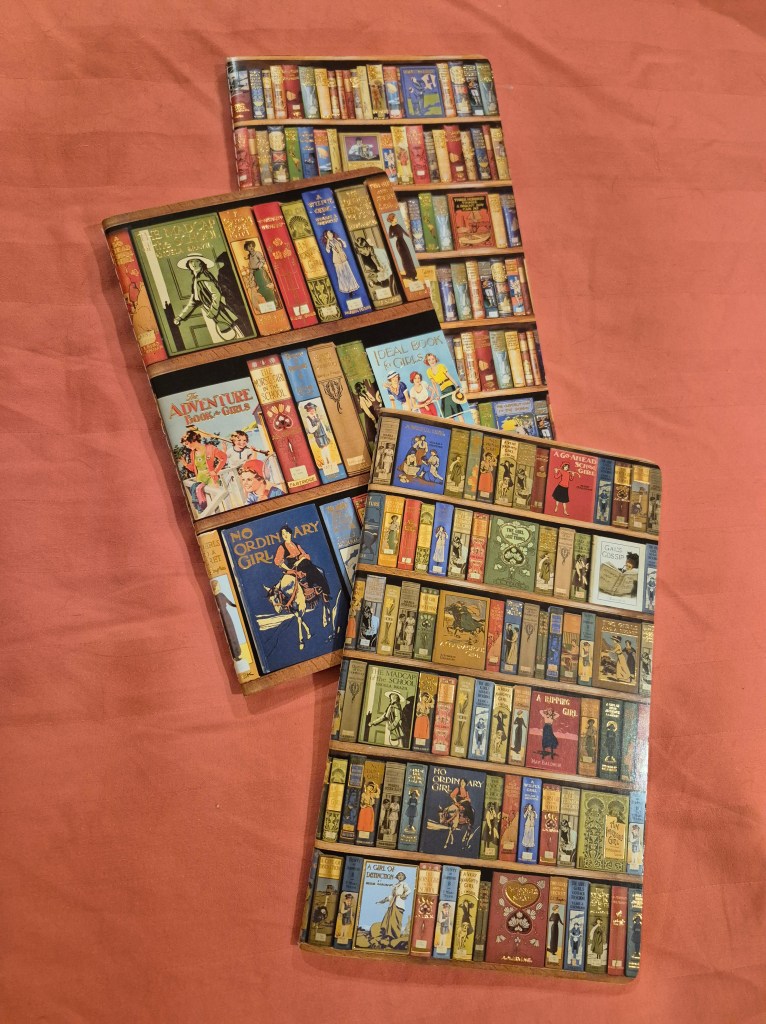
This is what my sister got for me, a belated Christmas present. What’s especially fabulous about these journals, is the titles of the books on the cover: A Courageous Girl, A Willful Girl, Gal’s Gossip, No Ordinary Girl, A Girl of Distinction, The Worst Girl in School, Two Girls and a Secret. Do you see a pattern? (Girl Power) AND- one side of the page is lined, the other is plain, perfect for doodles. Could it get any better?
Um, yes it can:
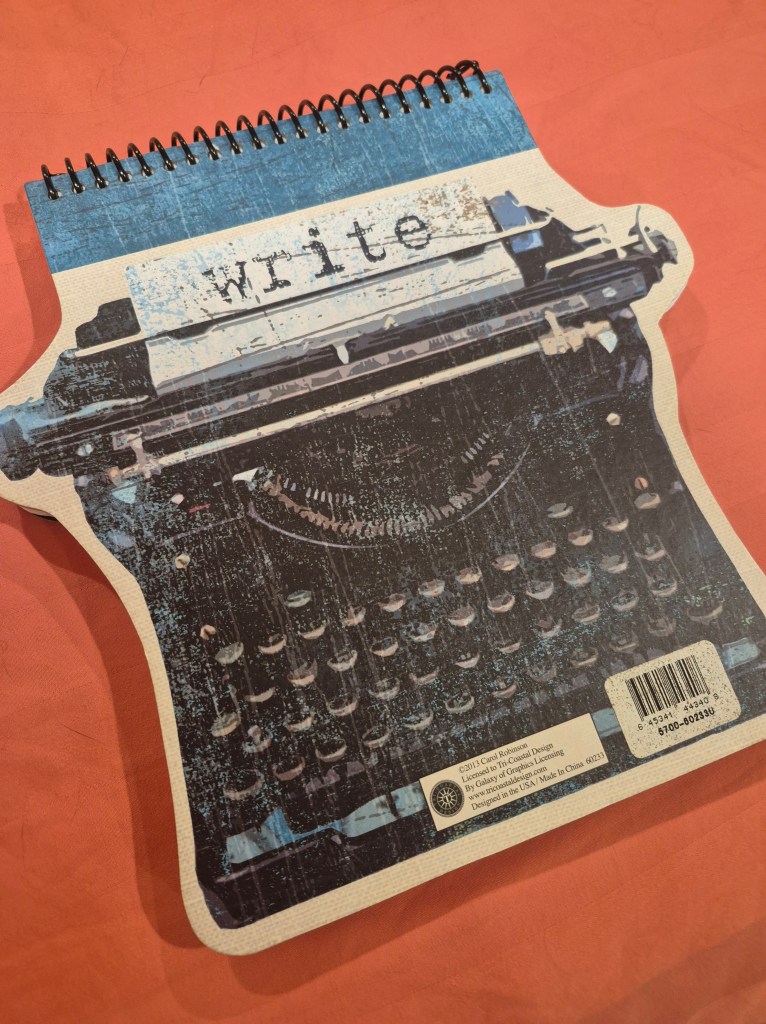
Who can resist a top-bound spiral journal- whether you’re left or right-handed, no spiral binding will get in your way! Perfect script all the way down the page! And come on, it’s cute!!! How can anyone resist a vintage typewriter on every page! (even if we’re the last generation to actually see, if not use, one of those babies).
Can I top this?
You know I can:

I bought this journal at the New York Renaissance Faire in Tuxedo Junction. Tooled, leather bound. Hand-made paper. Brass lock. I love the handsewn edges, they add an authentic touch of old-world craftsmanship and authenticity. I save this journal for ideas, not for writing an actual book because first, I can keep adding ideas (even if I probably won’t live long enough to incorporate all those ideas into novels or stories), and second, once a novel is typed and edited, I don’t keep the rough draft pages (research notes, yes).
Which leads me to how I got the idea for The Excalibur Vow.
I’m strolling along the fairgrounds. Jousters and acrobats and thespians cajole, tease, and lure in their audience. Royal knights and fair damsels feast on roasted turkey legs. Craftsmen hawk their wares, making promises of one-of-a-kind goods. In the background, the clang of an iron hammer against hot steel echoes. A blacksmith, sweating from the heat of his forge, forces the metal to his will.
Who is the sword for? What will it look like when it’s finished? What special qualities will the blacksmith fashion into the steel?
What’s the worst thing that could happen…?
He could break the sword.
Okay, he can reforge it, or make a new one.
But supposing he can’t ?
What’s the worst case scenario? (That’s how writers think: what’s the worst thing that could happen, and then, let’s make it even worse!)
Suppose the blacksmith breaks the most infamous sword in all history (sorry, JRR Tolkien, but Excalibur was famous long before Narsil, and was probably the inspiration for Isildur’s sword.).
Thus, an apprentice blacksmith does the most unimaginable thing: he breaks off a piece of Excalibur. The legends behind Excalibur, Arthur, magic, and the search for the lost sword, then the obsession to find it and prove it real (even today), and the addition of interesting side characters, time travel, and mysterious villains, tangled all together, form the story.
I’d scrawled just the basics in my journal: time traveling blacksmith, works on Excalibur (originally I had it that he got some magical abilities, but magic would make problems too easy to solve), shows up at a Ren faire, not knowing initially that he’s in the future, Excalibur is in a private collection and he has to steal it back (that would ruin the mystery; the greatest sword simply hidden in a vault? how pedestrian), and makes Wystan a common thief. So, lots of changes, but that’s generally how novels and stories evolve. Even if it takes a few years…
Next week, some of the interesting facts and research I uncovered around the Arthurian myth of Excalibur, England, and the future of the throne…
 Charlotte Bennardo