How’s That Again?
JRR Tolkien’s masterpiece trilogy, The Lord of the Rings, is epic, high fantasy filled with complex beings, language, architecture, and geography. I love that in his books there are: pictures of a magical elven doorway, genealogical lines of dwarves and hobbits, a specialized calendar used in the Shire, the alphabets used by men of the West, the high elves, and dwarves, and mostly, a map of Middle Earth. There was no way that Tolkien could have described all those things with words and we could clearly envision it.
So Draw Me a Picture
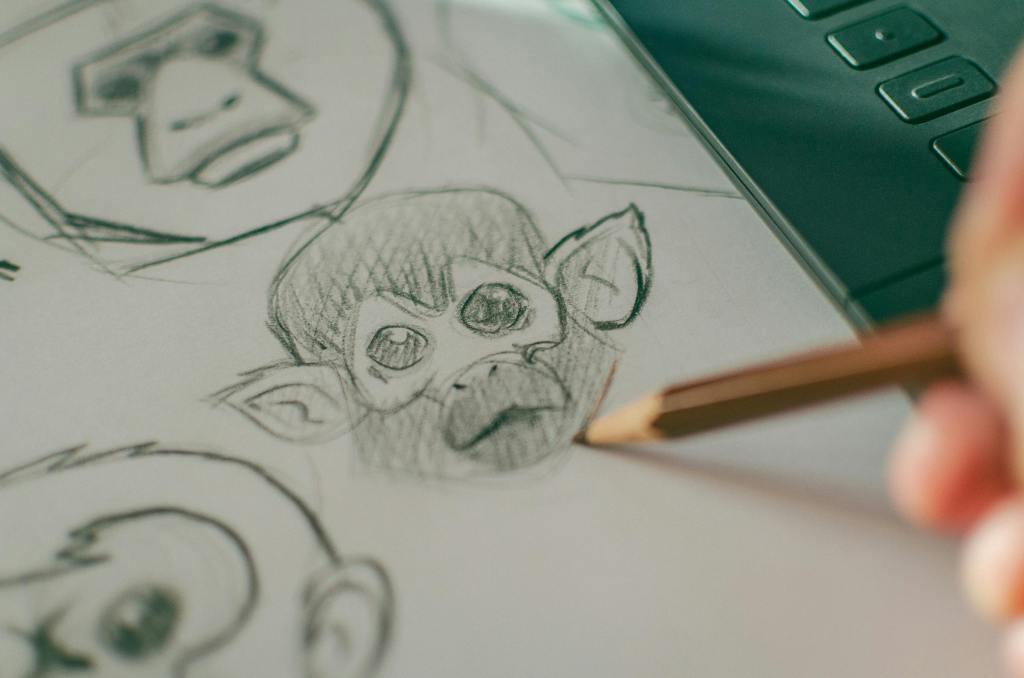
Photo by MESSALA CIULLA: https://www.pexels.com/photo/monkey-head-sketch-2831797/
Tolkien included detailed drawings to accompany his stories; not that all publishers (mostly likely few) will allow the added expense of including artwork, especially if you’re not an artist. But that doesn’t mean you shouldn’t create them. Even if no one ever sees them, your drawings for your novel world are vital.
Sharpen Your Pencils

Photo by Andrea Piacquadio: https://www.pexels.com/photo/woman-in-brown-scoop-neck-long-sleeved-blouse-painting-933255/
Or drag out your crayons, or paints, or chalks, or pens–whatever medium you use, and lay out your world. Your castle. Your creatures. Your space station. The room where the murder takes place. Why? Because drawing these places or things or creatures not only solidifies them in your mind, but will help you to accurately and consistently describe them when you write about them. It’s the same way a character profile with a picture of what your character looks like helps you to keep straight what color eyes, hair, and skin they have, and any quirks or unique aspects they have. Does your character have an unusual tattoo? Draw it out as best you can. Is there a fight scene and you’re trying to figure out if the villain gets thrown out the window or into a wall? By drawing out the scene, the room dimensions, and the features, it becomes easier to correctly place action and movements, and add details that you might not have thought of, which enrich your story.
But I Failed Art Class…
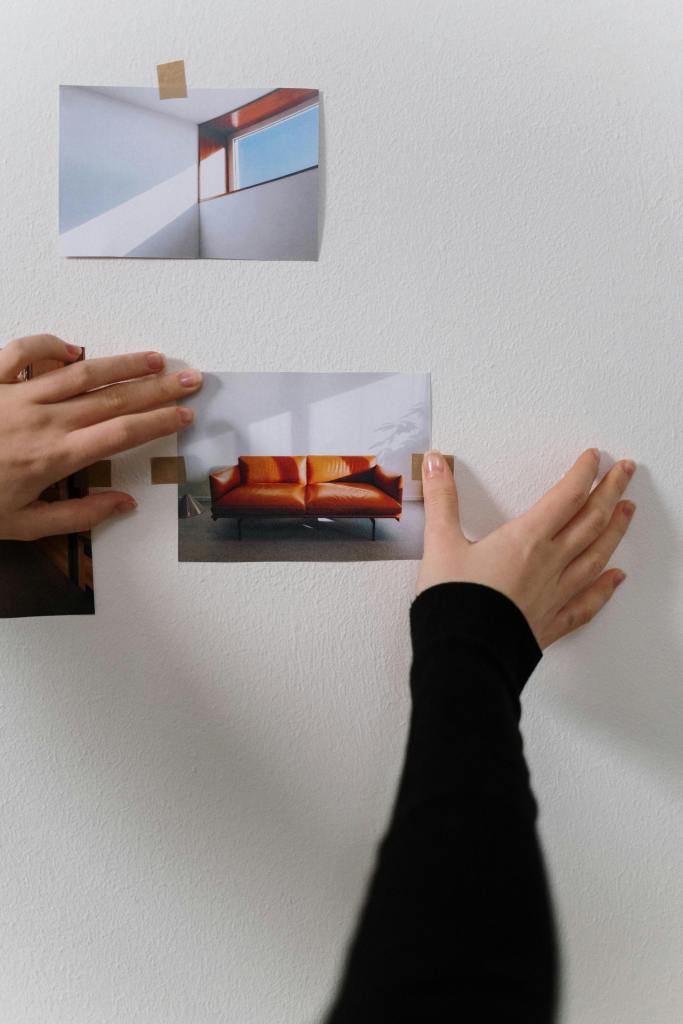
Photo by cottonbro studio: https://www.pexels.com/photo/person-sticking-a-picture-on-a-wall-6580018/
Hey, very few of us are adept at more than stick figures, even our cursive is pitiful. That’s why they make vision boards. I was required to make one in one of my MFA classes, and honestly, it was fun. While searching for pictures and photos and drawings of various aspects of my thesis novel, I dove deeper into my story, adding details that I hadn’t thought of. It doesn’t have to be complicated; a piece of poster cardboard, a wall (use painter’s tape to protect the surface), or even a notebook. No matter how you decide to do it, identifying depictions of how you see your novel reinforces your ideas and gives you consistency.
Remember-
As ad executive Fred R. Barnard said, “A picture is worth a thousand words.” Imagine what several pictures can do…
 Charlotte Bennardo
Leave a comment